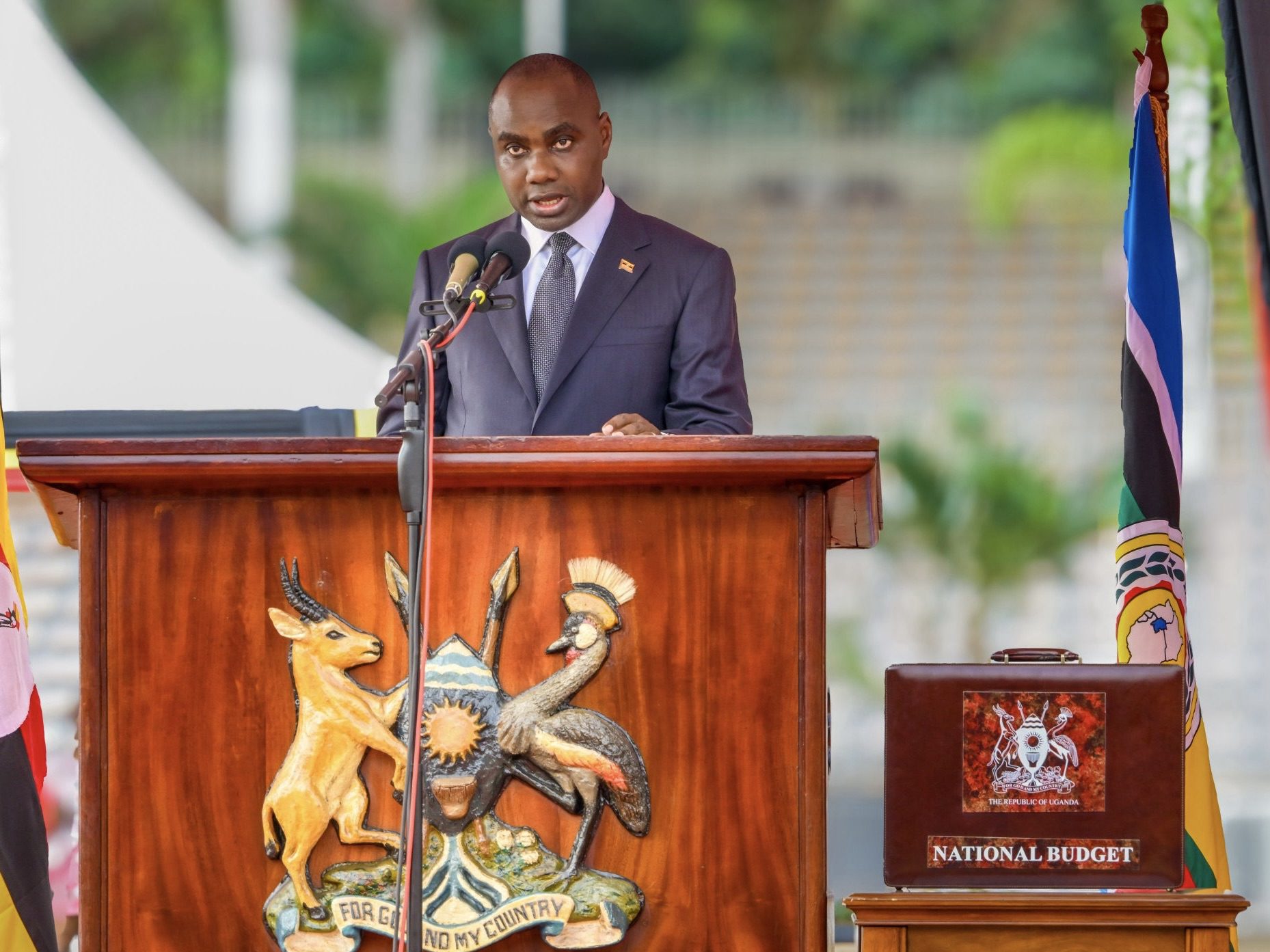
The Ugandan government has cumulatively invested approximately Shs 11 trillion in various wealth creation programmes, a strategic move aimed at accelerating the monetization of the economy and lifting households out of subsistence living.
The figures were revealed on Thursday by the Minister of Finance, Planning and Economic Development, Henry Musasizi, during the reading of the Shs 84.3 trillion national budget for the 2026/2027 financial year at the Kololo Ceremonial Grounds in Kampala.
Presenting his maiden budget speech, Minister Musasizi emphasized the government’s unwavering commitment to expanding economic opportunities across the country, announcing an additional injection of Shs 2.49 trillion into wealth-creation initiatives for the upcoming fiscal year.
According to the Finance Minister, the massive Shs 11 trillion cumulative investment has been directed towards targeted interventions aimed at farmers, youth, women, small businesses, and households currently relying on subsistence livelihoods.
“These interventions are reducing barriers to economic participation while expanding opportunities across the country,” Musasizi stated. He highlighted that the goal remains firmly fixed on transitioning Ugandans from survival to enterprise, and from poverty to prosperity.
The interventions span several key initiatives, each designed to provide accessible and affordable capital to specific demographic and economic groups.
Performance of Key Wealth-Creation Initiatives
Minister Musasizi provided a comprehensive breakdown of the performance and future direction of the government’s flagship socio-economic programs:
1. The Parish Development Model (PDM)
Launched in February 2022, PDM remains the central pillar of the government’s wealth-creation strategy. Describing it as a “structural transformation programme” rather than just a financing tool, Musasizi outlined plans for its evolution.
“We will begin a gradual and deliberate transition from government transfers to a self-sustaining financial ecosystem ultimately a PDM Bank underpinned by strong repayment performance, governance, and value-chain development,” Musasizi explained.
2. The Agricultural Credit Facility (ACF)
Aimed at commercializing agriculture, the government has invested Shs 371.7 billion into the ACF through co-financing arrangements with financial institutions. This has unlocked Shs 1.35 trillion in cumulative disbursements to over 14,000 beneficiaries. An additional Shs 47.68 billion has been allocated for the facility in FY 2026/27.
3. Support for Large-Scale Farmers
To bolster food security and commercial output, the government provided Shs 41 billion in the previous fiscal year to cover interest payments for farmers cultivating over 50 acres of grains and animal feed. This enabled 186 farmers to access Shs 169.1 billion from commercial banks. The government has allocated another Shs 41 billion to sustain this interest-subsidy initiative in the new financial year.
4. Small Business Recovery Fund
Established to help SMEs recover from the economic shocks of COVID-19, the fund provides financing of up to Shs 500 million at a 10% interest rate to formal enterprises employing at least two people. To date, it has disbursed over Shs 82.1 billion to 4,031 SMEs.
5. Urban Vendor Support Facility
Introduced through the Microfinance Support Centre (MSC), this new facility aims to provide affordable working capital for market vendors and informal urban operators. Currently piloted in six major markets within the Greater Kampala Metropolitan Area, it is slated for a nationwide rollout in FY 2026/27.
6. Targeted Demographic Funds
GROW Project: Financed by the World Bank, this initiative has extended Shs 133.14 billion in soft loans to 6,584 women-owned businesses, complementing the Shs 153.5 billion previously disbursed under the Uganda Women Entrepreneurship Programme (UWEP) to 244,805 women.
Youth Initiatives: The Youth Livelihood Programme (YLP) has financed 24,859 projects, benefiting 275,034 young people with an investment of Shs 195.4 billion. Furthermore, 57,849 youth have accessed the Youth Venture Capital Fund.
Teachers’ Welfare: Recognizing the essential role of educators, the government released Shs 20 billion to private teachers’ SACCOs to improve access to affordable credit, building on a previous Shs 25 billion allocation to Walimu SACCO umbrella structures.
ALSO READ:
- Court Martial Convicts Wakiso Taxi Driver Over UPDF Attire
- Court Martial Sentences Two State Informers to Death
- Renegade Lt. Gen. Peter Elwelu Apprehended in Soroti City Over Subversive Activities
- Abraham Luzzi Slasts UEDCL After Blackout Interrupts Birthday Party
- Celebrated Comedian Kapere Passes Away
Furthermore, the minister announced an additional Shs 568.65 billion allocation to enhance salaries for primary school teachers, Arts teachers in secondary schools, and BTVET institutions beginning FY 2026/27.
A Shs 84.3 Trillion Fiscal Plan
The heavy investment in wealth creation forms a core component of the broader Shs 84.3 trillion national budget for FY 2026/2027, which was passed by Parliament in April. The budget, the largest in Uganda’s history, will be primarily financed through domestic revenue projected at Shs 44.18 trillion.
While the budget prioritizes wealth creation, human capital development, and infrastructure, it continues to face significant fiscal pressure from statutory obligations. Debt servicing remains the single largest expenditure item, projected at approximately Shs 33.4 trillion—nearly 40% of the entire budget.
Despite these constraints, the substantial injection of funds into the grassroots economy signals a decisive push by the government to broaden the tax base by shifting the majority of the population into the formal, commercial economy.
“The wealth-creation interventions have expanded access to affordable capital, strengthened enterprise growth, and created jobs,” Musasizi concluded, expressing confidence in the country’s trajectory toward a monetized, prosperous economy.
Discover more from SANTA MEDIA UGANDA
Subscribe to get the latest posts sent to your email.



This is exactly what I was looking for. The APK is lightweight and doesn’t drain my battery too fast. Cheers to the team at phokplayapk!