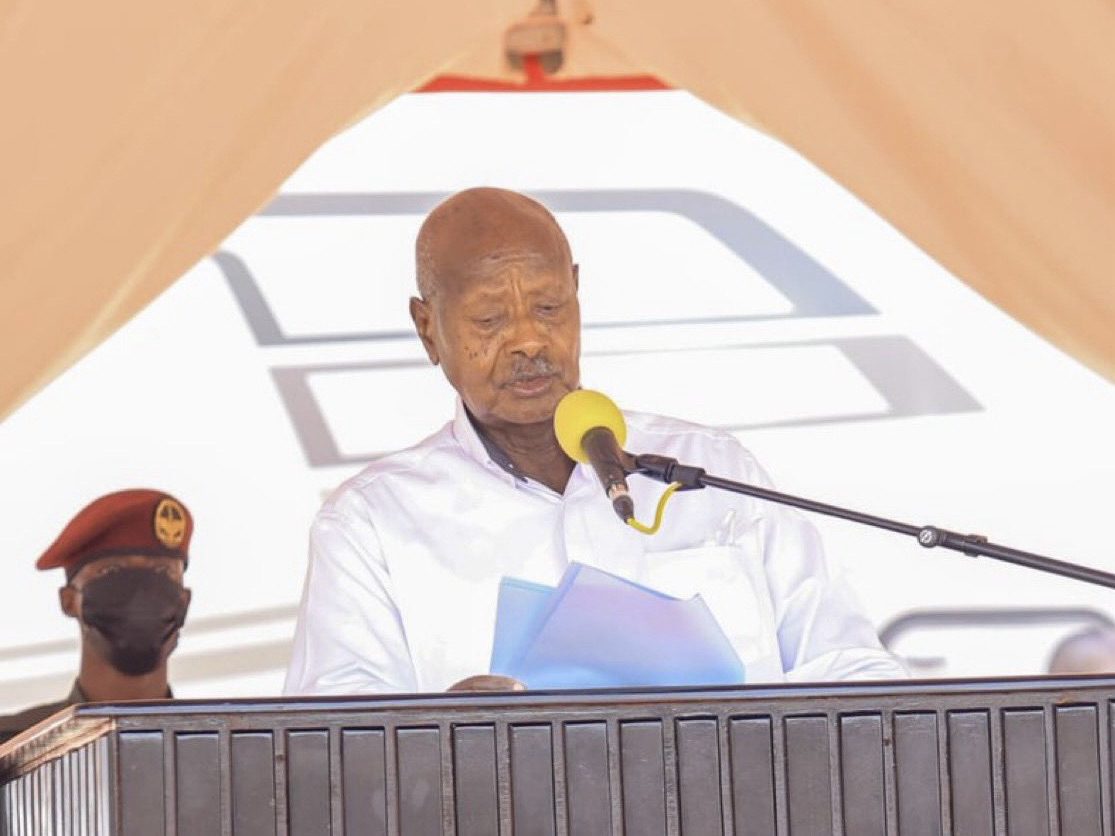
President Yoweri Museveni delivered a comprehensive and uncompromising State of the Nation Address (SONA) to Parliament and the country on Thursday, 4 June 2026.
In a defining speech that painted a picture of steady economic growth, rising exports, and ongoing infrastructure development, the President firmly demanded results from his new administration, laying out a strong push for value addition, wealth creation, and strict fiscal discipline.
The highly anticipated speech, delivered at the Kololo Ceremonial Grounds, marked the opening of the First Session of Parliament and serves as the inaugural State of the Nation Address for this current term of the President and the 12th Parliament.
Drawing a sharp line in the sand, Museveni warned government officials against bureaucratic inefficiencies, complacency, and underperformance, making it clear that newly vetted cabinet ministers must actively contribute towards the direct achievement of government plans and targets during their tenure.
A massive portion of the presidential address was dedicated to analyzing the country’s macroeconomic health and fiscal trajectory. Museveni provided a detailed account of how Uganda’s exports fared over the last fiscal year, revealing that national export earnings reached an impressive US$18 billion in the 12 months ending March 2026.
He noted that maintaining this upward trajectory requires an aggressive, structural shift away from exporting raw materials in favor of domestic manufacturing, mineral processing, and localized industrialization. According to the President, local processing is the true key to unlocking long-term prosperity and creating a sustainable trade balance.
The President shared ambitious economic growth projections, stating that the Ugandan economy is currently on track to grow by 6.4% in the current financial year, with a massive expansion projected to reach 10% in the subsequent year as commercial oil production begins.
This momentum is expected to increase the total size of the economy to approximately $80 billion (about sh304 trillion). Museveni contrasted these figures with historic data to showcase rapid economic transformation, pointing out that Uganda’s Gross Domestic Product (GDP) has grown significantly from a mere $3.9 billion in 1986 to $69.3 billion today under the foreign exchange method, or up to $197.1 billion when measured by purchasing power parity (PPP).
Addressing everyday economic realities, the President broke down what Ugandans are paying for basic commodities in the market, assuring the nation that the executive branch is continuously monitoring market dynamics to protect consumers from price inflation while actively incentivizing local manufacturing.
In a major legislative announcement aimed at grassroots economic empowerment, Museveni revealed that the government has strategically reserved billions in lucrative public contracts specifically for youth, women, and Persons with Disabilities (PWDs).
This structural policy is designed to ensure that the financial dividends of the nation’s ongoing economic progress are equitably distributed and that historically vulnerable groups can actively participate in the national wealth-creation agenda.
The President devoted considerable attention to the Parish Development Model (PDM), fiercely defending it as one of the government’s most vital weapons in the war against household poverty.
According to the address, PDM funding has successfully reached 3.7 million households across the country, with each designated parish currently holding Shs557 million under its local administration.
ALSO READ:
- Court Martial Convicts Wakiso Taxi Driver Over UPDF Attire
- Court Martial Sentences Two State Informers to Death
- Renegade Lt. Gen. Peter Elwelu Apprehended in Soroti City Over Subversive Activities
- Abraham Luzzi Slasts UEDCL After Blackout Interrupts Birthday Party
- Celebrated Comedian Kapere Passes Away
Museveni celebrated data indicating that household poverty has declined significantly over the decades, falling from 56.4% in 1992 to just 16.1% today, while the percentage of households participating in the formal money economy has surged from 9% at independence in 1962 to 67% today.
However, the President balanced these success stories with a stern critique of poor leadership and execution. He expressed deep frustration with public servants and local government officials whom he accused of prioritizing self-interest, noting that he is increasingly frustrated by leaders who continually request monetary allowances just to engage with citizens at the grassroots.
He even questioned local chiefs demanding motorized transport, dryly suggesting that a parish chief could ride a bicycle to execute government work and improve their physical fitness in the process.
Turning to strategic national infrastructure, Museveni outlined significant upgrades designed to lower the cost of doing business in East Africa. In the energy sector, national electricity generation capacity has expanded from a negligible 60MW in 1986 to 2,098MW today.
Looking to the future, the President unveiled an ambitious long-term national target of 50,000MW, which will be drawn from a diverse and clean energy mix including hydro, solar, gas, wind, geothermal, and nuclear sources.
In logistics and transport, the President touted the long-term benefits of the upcoming East African Crude Oil Pipeline (EACOP) and related petroleum infrastructure. Museveni noted that once completed, refined petrol and petroleum products will be transported directly through underground pipelines rather than competing with light vehicles on national highways.
This shift will effectively phase heavy fuel tankers off the roads, drastically reducing traffic congestion and road damage. Concurrently, the state is moving to revamp the old metre-gauge railway while advancing the development of a modern standard-gauge railway network to handle bulk regional cargo.
Concluding his address, the President outlined an extensive and ambitious legislative agenda for the coming financial year, signalling massive regulatory overhauls across multiple ministries. Proposed bills and upcoming amendments will target critical sectors including education, agriculture, public healthcare, tourism, transport, local government, and taxation.
Specific legislative adjustments will include reforms governing public and private universities, pre-primary and secondary school frameworks, health professions, workers’ compensation, and tax administration laws.
The address sets a clear, authoritative tone for the executive and legislative branches, making it unequivocally clear that the state will tolerate no further delays in its drive toward socio-economic transformation.
Discover more from SANTA MEDIA UGANDA
Subscribe to get the latest posts sent to your email.