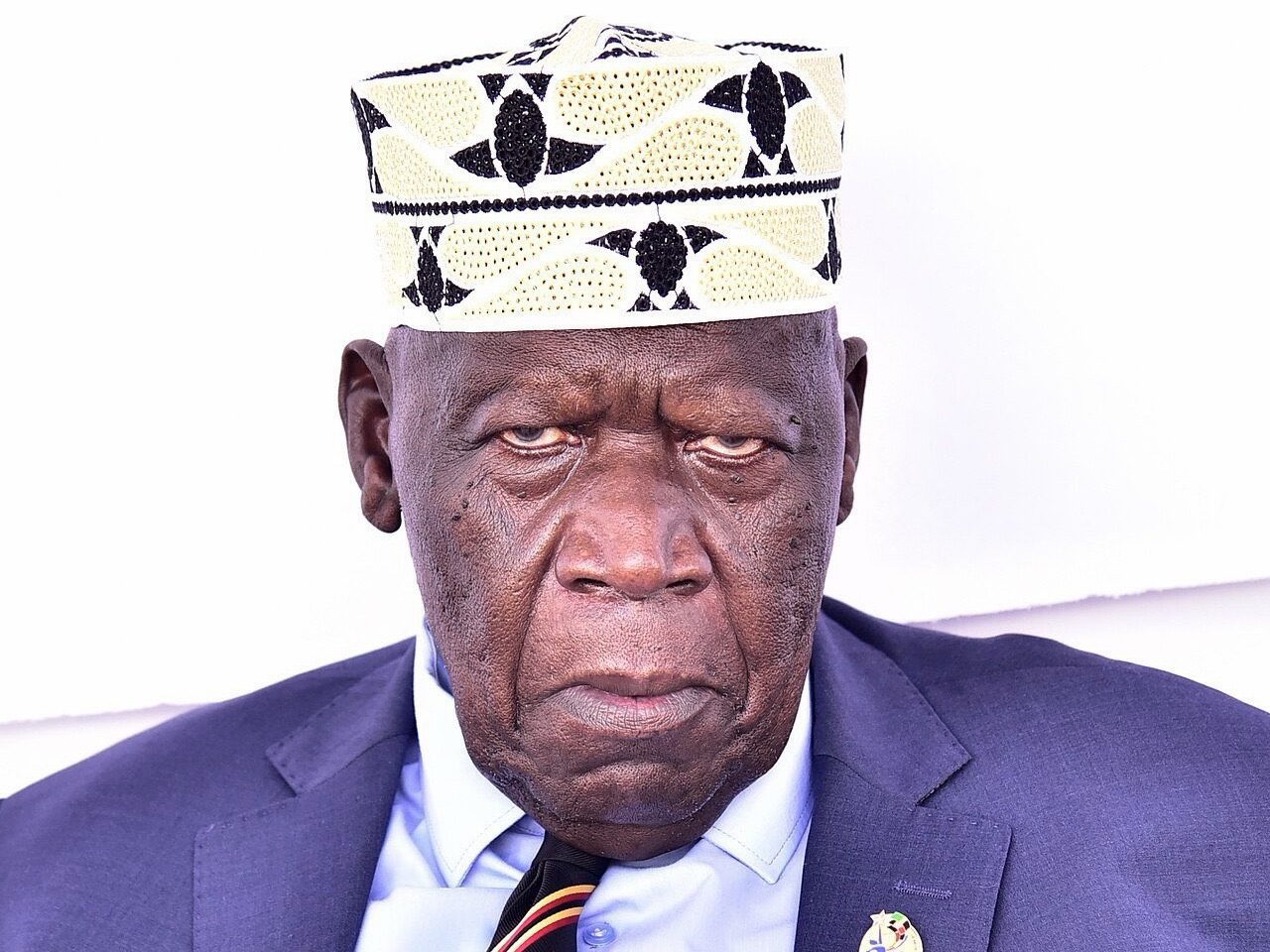
General Moses Ali, a towering figure whose political and military survival spanned more than half a century of Uganda’s turbulent history, passed away on July 18, 2026, at the age of 87.
Serving most recently as Uganda’s Second Deputy Prime Minister, Ali’s life story reads like a comprehensive history of post-colonial Uganda itself. He was a paratrooper, a coup plotter, a finance minister, an exiled rebel warlord, a peacemaker, and ultimately, a four-star general and long-serving cabinet minister under President Yoweri Museveni.
Early Life and Military Ascent
Born on April 5, 1939, in the Pakele division of Adjumani District, Moses Ali was the son of Muhammad and Veronica Porsche Ali. His early education took him through Erepi Church of Uganda and Old Kampala Senior Secondary School before he pivoted to a military career.
Ali distinguished himself early in the armed forces. In the late 1960s, he underwent rigorous Officer Cadet and Paratrooper Instructors Training in Israel, followed by further military education in the United Kingdom. By 1969, he was commissioned as a 2nd Lieutenant and tasked with commanding the Uganda Paratrooper School.
The Amin Era: Power and Paranoia
Ali’s first major entry onto the national political stage came in 1971 when he participated in the military coup that overthrew President Milton Obote and brought Idi Amin to power. He rose rapidly through the ranks of the Second Republic, eventually being appointed Minister of Provincial Administration and later, Minister of Finance in 1975.
As Finance Minister, Ali utilized his position to establish an Islamic charity. While this earned him widespread popular support and a fiercely loyal following within the Uganda Army, it also planted seeds of deep paranoia in Idi Amin. Fearing that Ali was building a parallel power base, Amin eventually turned on him.
Sensing the shifting tides, Ali narrowly escaped Kampala in his private car, heading for his stronghold in the West Nile region. He survived a dramatic gunfight with hitmen sent by his military rival, Yusuf Gowon, before Amin officially stripped him of his military honors and ministerial portfolio in 1978. When Amin’s regime collapsed following the 1979 Uganda-Tanzania War, Ali fled into exile in Nimule, South Sudan.
The Rebel Warlord: Leading the UNRF
Rather than fading into obscurity, Ali returned as a formidable force in the 1980s. Following the contested 1980 elections that returned Milton Obote to power (Obote II), Ali formed and led the Uganda National Rescue Front (UNRF).
Operating primarily out of the West Nile region with bases in southern Sudan, the UNRF was composed of former Uganda Army soldiers. Historians and military analysts often credit Ali with waging one of the most highly effective and disciplined guerrilla campaigns of the early Ugandan Bush War.
As Yoweri Museveni’s National Resistance Army (NRA) advanced on Kampala in 1986, Ali proved himself not just a tactician, but a pragmatic negotiator. He struck a favorable peace deal with Museveni, integrating his UNRF forces into the new national army. This move secured peace for the West Nile region and cemented Ali’s place in the new government.
ALSO READ:
- Court Martial Convicts Wakiso Taxi Driver Over UPDF Attire
- Court Martial Sentences Two State Informers to Death
- Renegade Lt. Gen. Peter Elwelu Apprehended in Soroti City Over Subversive Activities
- Abraham Luzzi Slasts UEDCL After Blackout Interrupts Birthday Party
- Celebrated Comedian Kapere Passes Away
A Pillar in the Museveni Government
Integrated as a Major General, Ali began a decades-long tenure in Museveni’s cabinet, displaying an unmatched ability to maintain political relevance. Over the next 40 years, he held a dizzying array of portfolios:
Minister of Tourism, Wildlife, and Antiquities
Minister of Youth, Culture, and Sports
Minister of Internal Affairs
Minister for Disaster Preparedness and Refugees
First, Second, and Third Deputy Prime Minister
He also served as the Member of Parliament for East Moyo (Adjumani) for multiple terms, fiercely advocating for the infrastructural development of northern Uganda and the West Nile. He was heavily involved in the region’s post-war recovery, championing the elevation of Adjumani to municipality status and the construction of the Laropi Bridge. In 2012, President Museveni promoted him to the rank of Four-Star General.
A Late-Life Scholar
Perhaps one of the most surprising chapters of Gen. Ali’s life was his return to academia in his golden years. Refusing to be defined solely by his military background, he enrolled at Makerere University in 2003, graduating with a Bachelor of Laws (Hons) in 2007 at the age of 68. He went on to earn a Diploma in Legal Practice from the Law Development Centre the following year, and later completed a Master of Arts in Intelligence Studies in 2015.
Final Years and Legacy
Gen. Moses Ali was the ultimate political survivor. To transition seamlessly from Idi Amin’s cabinet, to an active rebel high command, and finally to the top echelon of the NRM government required a rare blend of tactical pragmatism and regional influence that few other leaders in independent Uganda have ever possessed.
Key Legacies and Regional Impact
The Power Broker of West Nile: For decades, Gen. Ali served as the vital strategic bridge between the central government in Kampala and the West Nile sub-region. His integration strategy in 1986 guaranteed decades of relative stability for an area previously torn apart by post-Amin conflicts.
Infrastructural Champion: He was a fierce advocate for northern Uganda’s development. His signature achievements included lobbying for the upgrading of major highway networks, the ongoing development of the landmark Laropi Bridge, and championing the elevation of Adjumani to a thriving municipality status.
Breaking Academic Barriers: Proving that leadership requires continuous evolution, Gen. Ali surprised the nation by returning to school in his 60s. He successfully earned a Bachelor of Laws (LLB) from Makerere University in 2007, a Diploma in Legal Practice from the Law Development Centre (LDC), and a Master’s in Intelligence Studies in 2015.
The Final Handover of Power (May 2026)
In his final months, the veteran statesman prepared to exit the active political frontline. During the high-profile cabinet reshuffle on May 26, 2026, President Yoweri Museveni replaced Gen. Ali as the Second Deputy Prime Minister, appointing Dr. Crispus Kiyonga to the role.
However, in a move that political analysts view as a direct nod to Gen. Ali’s enduring dynastic influence and long-standing loyalty, his son, Siraj Musa Ali, was concurrently appointed to the cabinet as the Minister of Works and Transport, ensuring the family’s presence in high-level state governance continued.
Discover more from SANTA MEDIA UGANDA
Subscribe to get the latest posts sent to your email.



Super friendly community and a very polished website. I appreciate how they handle the promotions. It is a great place to relax and win some cash. Try beekingph
Quick payouts and a very fair system. It is hard to find a reliable spot these days, but idbongeslot delivers exactly what it promises.