

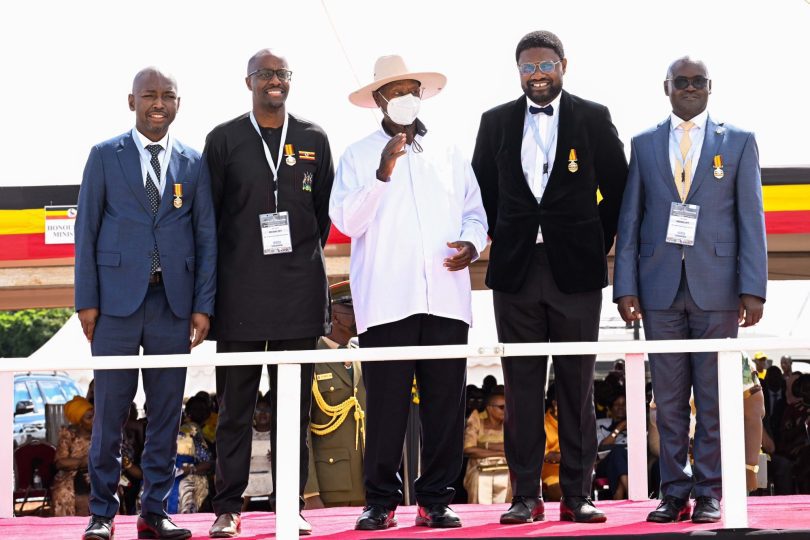
President Yoweri Museveni used Friday’s Labour Day celebrations in Buikwe District to lay out a sharp, infrastructure-heavy agenda for his upcoming five-year term, calling for a radical shift in how national savings and natural resources are managed.
Speaking just weeks before his mid-May inauguration, the President directed his harshest criticism at the National Social Security Fund (NSSF), arguing that the pension fund’s current reliance on government bonds is a missed opportunity for national development.
The President pointed out that while NSSF is sitting on a massive and growing pool of capital projected to hit Shs50 trillion by 2035, too much of it is tied up in non-profitable treasury instruments. Museveni advised that the fund should instead transition into a direct builder and owner of productive assets like toll roads.
He specifically highlighted the long-sought Kampala-Jinja expressway as a prime example of a project NSSF could finance and own, catering to the rich who are willing to pay for speed while the government continues to maintain standard public roads.
This push for wealth-creating investments comes with a stern warning against using worker savings for recurrent government spending. Recalling a high-level meeting in April attended by regional leaders and industrialist Aliko Dangote, Museveni reiterated that spending pension money on consumption would be a catastrophic mistake. His vision is to see these funds transformed into tangible infrastructure that serves as the “bone marrow” of a modern economy.
Beyond finance, the President signaled a major policy shift regarding the welfare of the industrial workforce. He announced that the government would begin securing land near industrial parks specifically for low-cost worker housing.
This initiative aims to integrate living spaces into industrial development, utilizing either private investors or the National Housing and Construction Company (NHCCL) to ensure that workers have affordable accommodation within reach of their jobs.
- Bukedde TV Political Reporter David Tamale Dead
- Ugandan TikToker ‘Jayden’ Dies After Long Battle with Aplastic Anaemia
- Gen Muhoozi Orders Andrew Mwenda to Stop Speaking on Tooro Kingdom
- Chief Prince Ruchunya Orders Bunyoro Premier Byakutaga to Apologize and Vacate
- ASP Henrietta Namande Dies Aged 44 from Pregnancy Complications
On the environmental and economic front, Museveni called for a total overhaul of how Ugandans use wetlands and water bodies. He urged farmers to abandon rice growing in wetlands—labeling it as low-profit and destructive—in favor of aquaculture.
According to the President, fish ponds situated on the periphery of wetlands can generate over Shs50 million per acre, a far higher return than traditional rice farming.
He promised that the government would prioritize support for fish farming starting next year, noting that current budgets were heavily weighted toward preparations for the 2027 AFCON tournament.
The President also addressed the depletion of Uganda’s fisheries, comparing the current open-access fishing to a stadium that has reached capacity. He argued that just as Namboole Stadium must limit entries for safety, the government must introduce stricter controls on how many people can participate in the fishing sector to prevent total exhaustion of the resource.
Museveni concluded by urging Members of Parliament to move beyond generalities and track household incomes at the parish level, insisting that poverty eradication will only be successful when monitored village by village.
Discover more from
Subscribe to get the latest posts sent to your email.



Leave a comment