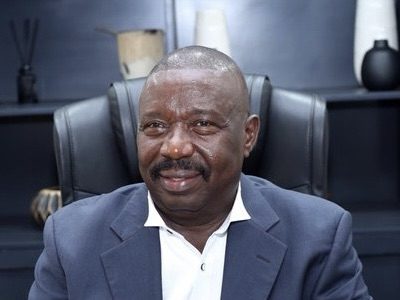
Former Minister of State for Finance, Mwesigwa Rukutana, has sounded a stark warning to the government and lawmakers against reversing Uganda’s long-standing economic liberalization policies, arguing that such moves threaten to undo decades of hard-won financial stability.
Drawing on his extensive tenure at the Ministry of Finance during Uganda’s critical economic recovery phase, Rukutana cautioned that current policy shifts—and proposed legislation seemingly aimed at restricting capital—could severely damage investor confidence and derail the nation’s progress.
Rukutana reminded the public of Uganda’s past as a Highly Indebted Poor Country (HIPC). During that era, the country was heavily tethered to foreign aid, with over 50% of the national budget funded by grants and loans from the World Bank, the International Monetary Fund (IMF), and bilateral donors.
“Under the HIPC classification, Uganda had limited autonomy over its economic direction. National budgets, development plans, and key projects required approval from international lenders,” Rukutana explained.
To escape this debt trap, the government had to make tough, mandatory choices: boost exports, slash luxury imports, stabilize inflation, and fundamentally open up the economy. He credited President Yoweri Museveni for championing this liberalization agenda, which enabled investors to repatriate profits freely and led to the privatization of struggling state-owned enterprises.
Rukutana also paid tribute to the late architects of this economic rescue—senior technocrats like Chris Kassami, Prof. Emmanuel Tumusiime-Mutebile, and Keith Muhakanizi—who steered Uganda through rigorous global financial assessments.
- Court Martial Convicts Wakiso Taxi Driver Over UPDF Attire
- Court Martial Sentences Two State Informers to Death
- Renegade Lt. Gen. Peter Elwelu Apprehended in Soroti City Over Subversive Activities
- Abraham Luzzi Slasts UEDCL After Blackout Interrupts Birthday Party
- Celebrated Comedian Kapere Passes Away
The veteran politician argued that the results of those tough reforms speak for themselves. Today, Uganda largely finances its own budget, maintains robust foreign exchange reserves, and recently crossed the threshold into lower-middle-income status.
Furthermore, during his time as Minister of State for Labour, policies encouraging unrestricted capital inflows saw diaspora remittances jump from $400 million to $900 million. Today, that figure stands at an impressive $1.6 billion.
“Why depart from a path that has brought us this far?” Rukutana questioned. He acknowledged the state’s right to monitor financial flows for security reasons but insisted that existing regulatory frameworks should be strengthened rather than replaced with restrictive new laws.
Rukutana did not mince words regarding recent government policy reversals, specifically pointing to the controversial integration of specialized agencies like the Uganda National Roads Authority (UNRA) and the Rural Electrification Agency (REA) back into their parent ministries. He noted that these mergers have yielded mixed-to-negative results, particularly stalling progress in rural areas.
Throwing his weight behind the widespread public opposition to the proposed restrictive legislation, he urged the bill’s proponents to either withdraw it for broader consultation or rethink their strategy.
“We legislate for the people,” Rukutana concluded. “Any law that contradicts their aspirations risks failure in both spirit and practice.”
Discover more from SANTA MEDIA UGANDA
Subscribe to get the latest posts sent to your email.