

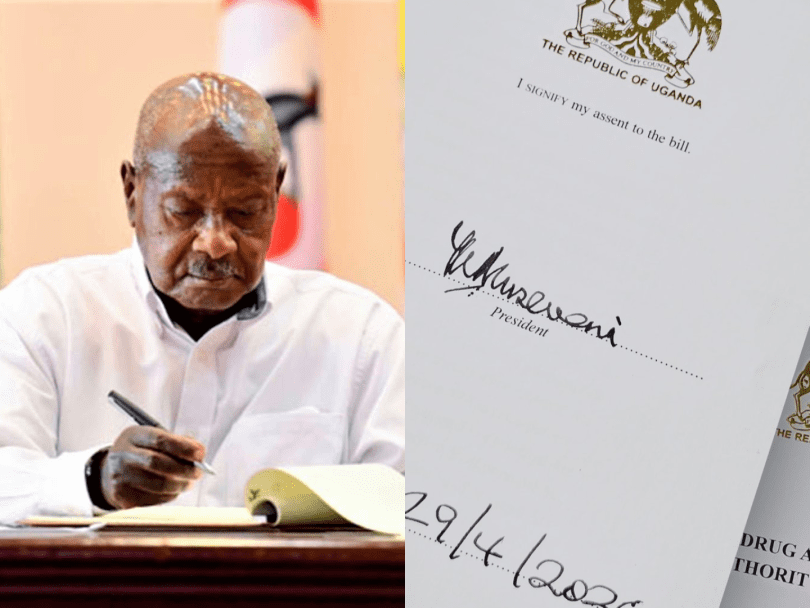
In a sweeping move to modernize Uganda’s regulatory and judicial landscape, President Yoweri Museveni has formally assented to eight critical pieces of legislation. The new laws introduce stringent reforms across multiple key sectors, signaling a government-wide push to tighten operational standards, protect vulnerable workers, and enhance criminal justice capabilities.
The comprehensive legislative package spans across the health, energy, employment, and justice sectors, replacing outdated frameworks with modern regulations designed to spur economic transformation and accountability.
At the forefront of the newly signed legislation is the National Drug and Health Products Authority Act, 2026. This law establishes a highly fortified regulatory umbrella over the country’s medical supply chain. It grants authorities expanded oversight over medicines, vaccines, medical devices, and even cosmetics, aiming to permanently weed out substandard health products from the Ugandan market.
Equally significant is the Energy Efficiency and Conservation Act, 2026, which places new environmental and operational demands on both domestic and industrial power consumers. The Act makes energy audits and efficiency standards mandatory, effectively cracking down on the use of energy-wasting technologies to promote sustainable national power consumption.
In a major victory for Uganda’s workforce, the President also signed the Employment (Amendment) Act, 2025. This legislation specifically targets the exploitation of vulnerable groups by explicitly expanding legal safeguards for casual laborers, domestic workers, and migrant employees.
- Bukedde TV Political Reporter David Tamale Dead
- Ugandan TikToker ‘Jayden’ Dies After Long Battle with Aplastic Anaemia
- Gen Muhoozi Orders Andrew Mwenda to Stop Speaking on Tooro Kingdom
- Chief Prince Ruchunya Orders Bunyoro Premier Byakutaga to Apologize and Vacate
- ASP Henrietta Namande Dies Aged 44 from Pregnancy Complications
On the security front, the Forensic and Scientific Analytical Services Act, 2026 is set to revolutionize how crimes are investigated in the country. The law provides a much-needed legal framework to modernize Uganda’s forensic capabilities, dictating strict new protocols for the handling of scientific evidence to strengthen criminal prosecutions.
The President also approved several structural reforms aimed at improving state efficiency, including:
• The Magistrates Courts (Amendment) Act, 2026: Designed to clear judicial backlogs and enhance the speed and efficiency of lower-tier courts.
• The Non-Performing Assets Recovery Trust (Repeal) Act, 2024: Dissolves the Trust, transferring the mandate of handling distressed financial assets directly to the Ministry of Finance.
• The Copyright and Neighbouring Rights (Amendment) Act, 2026: A welcome update for creators, modernizing intellectual property protections in the digital age.
• The Public Enterprises Reform and Divestiture (Amendment) Act, 2024: Aimed at tightening the management and oversight of state-owned entities.
Government insiders indicate that these eight laws are the cornerstone of a broader reform agenda. As the respective ministries roll out implementation guidelines in the coming months, businesses and citizens alike should prepare for significant institutional shifts.
Discover more from
Subscribe to get the latest posts sent to your email.







Leave a comment